Structural Drying and Dehumidification in Snohomish, WA
Wet framing and flooring stay wet long after the water is gone. Snohomish crews place air movers and dehumidifiers by room class, read moisture every day and remove equipment only when the structure matches dry reference values.
(888) 509-1696Drying dispatch for Snohomish properties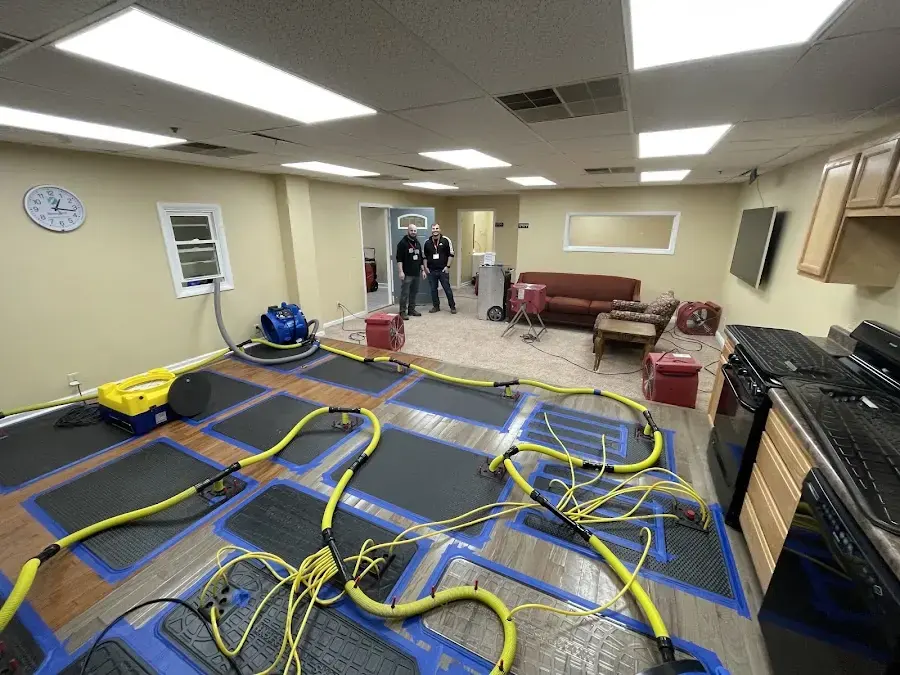
What to do first about structural drying and dehumidification in Snohomish
- 1
Measure and classify
Moisture meters and a thermal camera map the wet materials, and room class sets the equipment.
- 2
Place the equipment
Air movers, dehumidifiers and mats are set so air crosses every wet surface and cavity.
- 3
Read and adjust
Temperature, humidity and moisture are logged daily, and units move as the wet areas shrink.
- 4
Remove at dry standard
Equipment leaves only when materials match dry reference readings, and the final log is saved.
What does structural drying and dehumidification cost in Snohomish, WA?
One or two rooms usually run $1,000 to $2,500, several rooms or a crawl space $2,500 to $6,000, and hardwood, subfloor or Class 4 drying $6,000 to $14,000, depending on equipment days.
One or two rooms
$1,000 to $2,500
- Air movers plus one LGR
- Readings logged daily
- Three to five days typical
Several rooms or a crawl space
$2,500 to $6,000
- Equipment sized by room class
- Crawl space airflow ducted
- Psychrometric logs kept
Hardwood, subfloor or Class 4
$6,000 to $14,000
- Desiccant dehumidifiers added
- Mats and cavity drying
- Longer equipment run
These are typical ranges, never a quote. The water category, the wet square footage, the material class and how soon drying began move the total most. The water damage cost calculator narrows it for your own loss.
How the structural drying and dehumidification job runs in Snohomish
The walkthrough tech takes moisture readings before a single air mover goes down, so the plan follows what is actually wet. The drying team leaves the equipment running until the meters, not the look of the room, say the job is dry.
- 1
Assess the structure
Meters, a thermal camera and reference readings from dry materials set the drying goal.
- 2
Set equipment
Air movers, LGR or desiccant dehumidifiers and mats go in according to room class and material.
- 3
Monitor daily
Each visit logs humidity, temperature and moisture, and the setup changes whenever progress stalls.
- 4
Complete and document
Equipment is removed at dry standard, and the log, photos and summary go to the adjuster.
What the equipment does
- Air movers push dry air across surfaces and into wall and floor cavities.
- LGR dehumidifiers pull water out of the air and hold the room at a steady humidity.
- Desiccant units handle cold spaces and dense materials that refrigerant units cannot dry.
- Drying mats draw moisture from hardwood and subfloor through the surface.
Reading the numbers every day
Each visit records air temperature, relative humidity and moisture content in drywall, framing and flooring, then compares them with unaffected reference materials. When the numbers stop falling, the setup is changed; when they reach the reference, the equipment is removed.
Those psychrometric logs show the adjuster why the equipment stayed as long as it did, and they protect the owner if a later dispute arises over drying time.
Where drying gets harder
- Hardwood and thick subfloor release moisture slowly and may need mats.
- Crawl spaces and wall cavities need ducted airflow, not loose fans.
- Cool, damp weather slows evaporation, so desiccant units earn their place.
Drying usually follows water extraction so the machines are not asked to remove standing water.
Structural drying and dehumidification in Snohomish and the towns next to it
Drying equipment is placed across ZIP codes 98291, 98296 and 98290, in the Historic District, Downtown, Dutch Hill, North Lake, Midtown District, Central West and the Pilchuck District, in homes and offices alike.
The same service nearby: structural drying and dehumidification in Lake Stevens, Everett, Monroe.
Related water damage services in Snohomish
Structural Drying and Dehumidification questions in Snohomish, WA
Wet walls or floors still damp?
Any leak still running in Snohomish is handled as urgent, day or night.
(888) 509-1696Dispatch for Snohomish drying jobsWhy do fans and a dehumidifier run for days?
Water hides in framing, subfloor and drywall that look dry, and it leaves slowly. Equipment keeps running until meter readings in those materials match unaffected references, which takes days.
What is the difference between an LGR and a desiccant unit?
An LGR uses refrigeration to condense water from warm, humid air. A desiccant unit uses a drying wheel and works better in cold air and in dense materials such as hardwood.
Can drying be done by opening windows?
Rarely in western Washington, where winter air is already damp. Controlled dehumidification removes water from the air and from the materials, while open windows can add humidity.
How is a drying job considered finished?
The readings decide it. Drywall, framing and flooring must reach the same moisture level as unaffected materials of the same type, and the final log shows the numbers.
Can drying start before the leak is repaired?
Yes, once the water source is stopped. Repair and drying can run side by side, and the equipment stays until the readings finish, whatever the repair schedule.
Why is equipment sometimes moved during the job?
Wet areas shrink as materials dry, so units are shifted toward what is still wet and removed from rooms that have reached their targets. Daily readings drive every move.
Damp framing in a Snohomish building holds water until dried
Describe what flooded, which rooms stayed wet and whether equipment is already running, and dispatch will plan the right setup.
(888) 509-1696Drying help in Snohomish- Moving water handled as urgent, nights included
- Drying held to IICRC S500
- Moisture logs kept for your insurer