Structural Drying in Everett, WA
Water that has been extracted still leaves wet framing, subfloor and drywall. Crews in Everett place air movers and dehumidifiers by room class and take readings until the structure matches dry reference points.
(888) 509-1696Everett drying help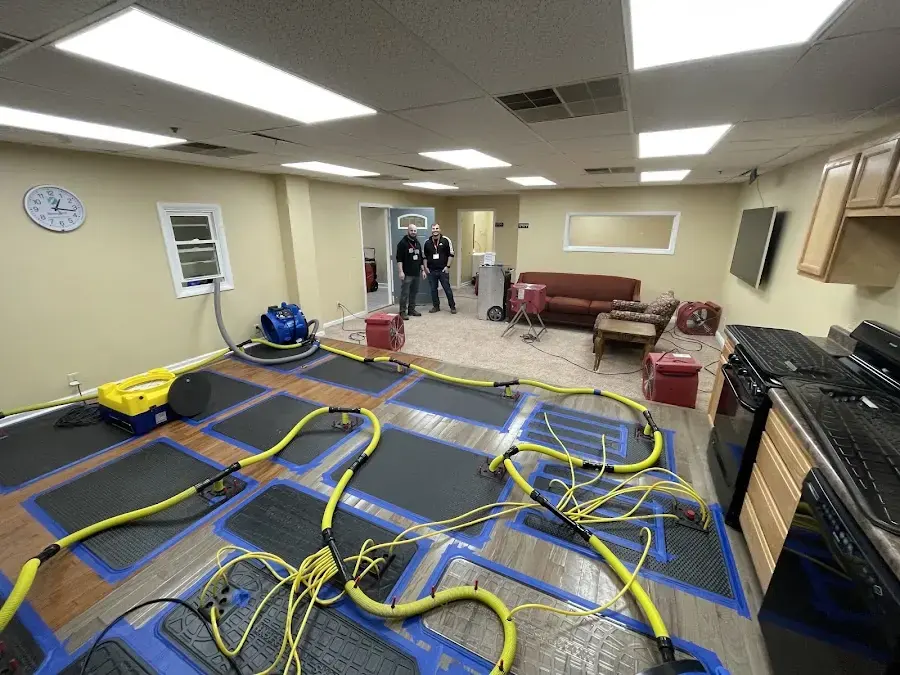
What to do first about structural drying and dehumidification in Everett
- 1
Keep equipment on
Once drying equipment is in, leave it on, since turning it off lets the structure take moisture back.
- 2
Keep the area closed
Keep windows and doors closed so dehumidifiers work on the structure, not outdoor air.
- 3
Leave equipment in place
Leave air movers and hoses where they were set, since placement follows the moisture map.
- 4
Report changes
Tell the crew about new stains, odors or damp spots so readings can be rechecked.
What does structural drying and dehumidification cost in Everett, WA?
Drying one or two rooms usually costs $1,000 to $2,500. Several rooms or a crawl space run $2,500 to $6,000, and hardwood, subfloor or dense materials that need desiccant dehumidifiers can reach $6,000 to $14,000.
One or two rooms
$1,000 to $2,500
- Air movers and one dehumidifier
- Readings each visit
- Three to five days
Several rooms or crawl space
$2,500 to $6,000
- Equipment sized by room
- Crawl space drying
- Psychrometric logs kept
Hardwood, subfloor or dense materials
$6,000 to $14,000
- Desiccant dehumidifiers
- Drying mats and cavity drying
- Longer equipment run
These are typical ranges, never a quote. The water category, the wet square footage, the material class and how soon drying began move the total most. The water damage cost calculator narrows it for your own loss.
How the structural drying and dehumidification job runs in Everett
The walkthrough tech takes moisture readings before a single air mover goes down, so the plan follows what is actually wet. The drying team leaves the equipment running until the meters, not the look of the room, say the job is dry.
- 1
Class the rooms
A meter and thermal camera sort rooms by how much water the structure absorbed.
- 2
Place the equipment
Air movers, dehumidifiers and mats go in by room class, with ducting for crawl spaces.
- 3
Monitor daily
Readings are logged each visit, and equipment is moved or removed as areas dry.
- 4
Confirm dry standard
Final readings are checked against dry reference points and the log goes to the adjuster.
How the equipment is chosen
Rooms are classed by how much of the structure absorbed water, and the class sets the number of air movers and the type of dehumidifier. Low-grain units handle most jobs, and desiccant units take over when air is cold or the materials are dense.
- Air movers push dry air across wet surfaces to lift moisture
- Dehumidifiers pull that moisture out of the air and drain it away
- Drying mats and cavity ports reach hardwood and the space inside walls
Proof that it is dry
A psychrometer logs temperature and humidity in the room and outdoors, and a moisture meter reads the wood, drywall and subfloor. The log shows the readings falling day by day, and the equipment leaves only when they match dry reference points elsewhere in the house.
After extraction or a leak
Drying usually follows water extraction after a burst pipe, appliance leak or storm, and it can also stand alone when a slow leak never produced standing water, as with a hidden appliance leak.
Structural drying and dehumidification in Everett and the towns next to it
Drying work is scheduled across Everett ZIP codes 98201, 98203, 98204 and 98208, in neighborhoods such as Bayside, Silver Lake, Westmont, Eastmont, Glacier View, Harborview, Valley View and Twin Creeks.
The same service nearby: structural drying and dehumidification in Lake Stevens, Snohomish, Marysville.
Related water damage services in Everett
Structural Drying and Dehumidification questions in Everett, WA
Wet structure after cleanup?
Any leak still running in Everett is handled as urgent, day or night.
(888) 509-1696Everett drying helpWhy do open windows not dry a wet room?
From October to March the outdoor air in Everett is cool and damp and cannot carry much moisture away. Dehumidifiers remove water from the air directly, while air movers keep dry air moving over wet surfaces.
How long does structural drying take?
Many jobs run three to five days, while hardwood, subfloor and crawl space drying often take longer. The log, not the calendar, decides when equipment is removed.
Is the equipment loud and does it use a lot of power?
Air movers and dehumidifiers run continuously and add noise and power use for several days. Crews place them to limit tripping hazards and spread the load across circuits.
What is a psychrometric log?
It is a record of temperature, humidity and moisture content taken at each visit. Adjusters use it to see that drying was steady and ended only when the structure reached dry targets.
Can hardwood floors be dried instead of replaced?
Often, when drying mats start early and the boards have not cupped. Mats pull moisture up through the surface, and the subfloor beneath is dried by cavity ports.
Does fast drying prevent mold?
Drying within the first day or two removes the moisture that mold needs. Wet materials left longer can grow it, so readings continue until framing and drywall reach dry targets.
Wet framing and subfloor stay damp until equipment pulls the moisture out
A crew sets air movers and dehumidifiers by room class, logs readings daily and removes equipment when the Everett structure tests dry.
(888) 509-1696Send a drying crew to Everett- Moving water handled as urgent, nights included
- Drying held to IICRC S500
- Moisture logs kept for your insurer