Structural Drying and Dehumidification in Marysville
Rain falls on about 150 days a year in western Washington valleys, so outdoor air rarely dries a wet house. Crews set monitored air movers and dehumidifiers, take readings daily and stop only when the structure reads dry.
(888) 509-1696Marysville drying help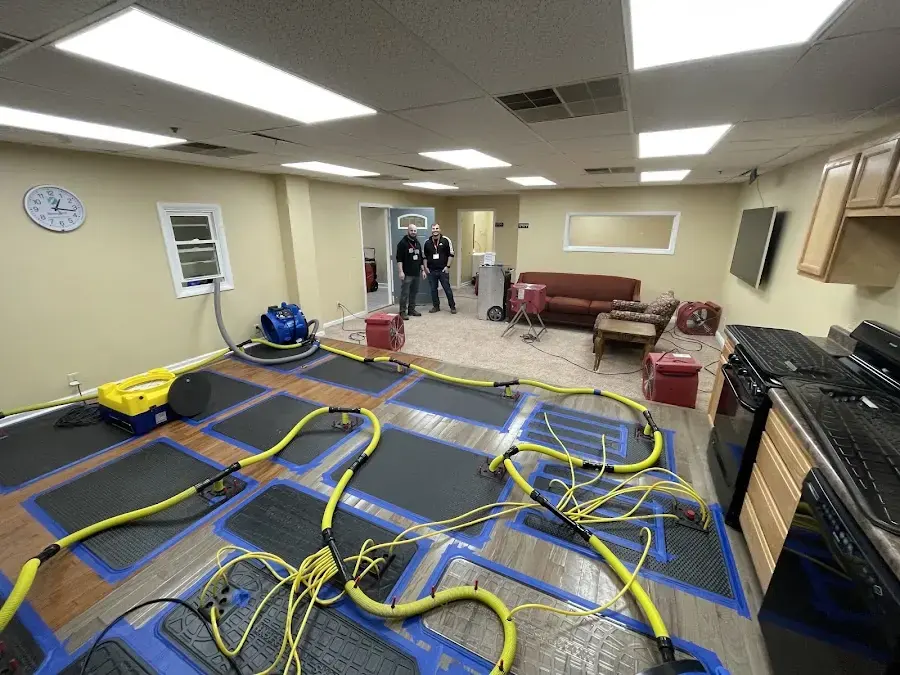
What to do first about structural drying and dehumidification in Marysville
- 1
Keep doors and windows shut
Outside air adds moisture in a rainy climate, so keep the space closed.
- 2
Leave the equipment alone
Do not move or switch off air movers and dehumidifiers, because placement is set by readings.
- 3
Empty dehumidifier tanks
Empty any dehumidifier tank on the schedule the crew sets.
- 4
Report new damp spots
Call if a wall, ceiling or floor feels damp, smells musty or shows a new stain.
What does structural drying and dehumidification cost in Marysville, WA?
Structural drying in Marysville typically runs from $1,000 to $14,000, depending on how many rooms are wet, whether hardwood, subfloor or a crawl space is involved, and how many days of equipment the readings call for.
One or two wet rooms
$1,000 to $2,500
- Air movers and one LGR unit
- Readings every day
- Three to five days
Several rooms or a crawl space
$2,500 to $6,000
- Equipment placed by room class
- Under-floor drying added
- Psychrometric records kept
Hardwood, subfloor or Class 4 loss
$6,000 to $14,000
- Desiccant dehumidifiers
- Mats and cavity drying systems
- More equipment days
These are typical ranges, never a quote. The water category, the wet square footage, the material class and how soon drying began move the total most. The water damage cost calculator narrows it for your own loss.
How the structural drying and dehumidification job runs in Marysville
The walkthrough tech takes moisture readings before a single air mover goes down, so the plan follows what is actually wet. The drying team leaves the equipment running until the meters, not the look of the room, say the job is dry.
- 1
Measure and map
Meters and a thermal camera locate each wet material, and a drying goal comes from dry reference readings.
- 2
Place the equipment
Air movers, dehumidifiers and mats are laid out by room class and the volume of air.
- 3
Monitor each day
Temperature, humidity and moisture readings are logged, and equipment is moved as areas dry.
- 4
Confirm the dry standard
Machines come out only once every material meets its goal.
How drying equipment works
- Air movers sweep dry air across wet surfaces
- LGR dehumidifiers draw water vapor out of the air
- Drying mats and cavity systems treat hardwood and walls
- Desiccant units handle cold or very wet jobs
Machines are positioned by room class and size, not by guesswork. Readings of temperature, humidity and vapor pressure show whether the air is taking moisture out of the structure.
Why Marysville needs equipment drying
Western Washington valleys see measurable rain on about 150 days a year, and December and January often record precipitation on 20 to 25 days or more. With outdoor air that damp, open windows and fans cannot finish the job, so controlled dehumidification matters.
Wet floors, walls and framing dry at different speeds. Hardwood and subfloors hold water longest, which is why readings continue until the slowest material reaches its target, not just the surface.
What decides the drying schedule
- Water category and how long the structure stayed wet
- Hardwood, subfloor or other dense materials involved
- Crawl space or cavity moisture that needs extra airflow
Extraction should come first, as described under water extraction. Standing water under a raised floor falls under crawl space water removal.
Structural drying and dehumidification in Marysville and the towns next to it
Structural drying calls cover ZIP codes 98270 and 98271, including Downtown, Jennings Park, Sunnyside, Whiskey Ridge, Cedarcrest, Getchell Hill, North Marysville and Smokey Point, along with neighborhoods around Comeford Park.
The same service nearby: structural drying and dehumidification in Lake Stevens, Arlington, Everett.
Related water damage services in Marysville
Structural Drying and Dehumidification questions in Marysville, WA
Walls still feel damp?
Any leak still running in Marysville is handled as urgent, day or night.
(888) 509-1696Reach a Marysville structural drying crewHow many days does a wet structure need to dry?
Clean water in one or two rooms usually takes three to five days. Hardwood, subfloors, crawl spaces and Category 3 losses take longer, and daily readings decide when machines are removed.
Why can open windows and fans not dry a wet house?
In a damp climate the outside air is often as wet as the indoor air. Dehumidifiers remove water from the air so wet materials keep releasing moisture, which fans alone cannot do.
What makes an LGR dehumidifier different?
LGR stands for low grain refrigerant. It pulls more water from air at low humidity than a standard unit, which keeps drying going as the materials get drier.
Will hardwood floors survive a soaking?
Often, when the water was clean and drying starts quickly. Drying mats pull moisture from the boards, and readings show whether cupping will settle or the wood must be replaced.
What do the daily readings measure?
Moisture content in materials, plus temperature, humidity and vapor pressure in the air. Those numbers show whether the equipment is working and when the structure matches its dry reference.
Will mold grow if drying is delayed?
It can. Mold may begin within 24 to 48 hours in wet materials, so extraction and drying should start as soon as the water source is stopped.
Wet structure in Marysville? Start the dehumidifiers before moisture settles in
Equipment is set by measured moisture, checked each day and removed only when readings match dry reference materials.
(888) 509-1696Marysville drying crews, any hour- Moving water handled as urgent, nights included
- Drying held to IICRC S500
- Moisture logs kept for your insurer