Structural Drying and Dehumidification in Arlington, WA
Once the water is out, the moisture left in floors, walls and framing has to be driven out with equipment. In Arlington's mild, rainy winters, open windows do not help, so monitored dehumidification does the drying.
(888) 509-1696Wet framing in Arlington? Call now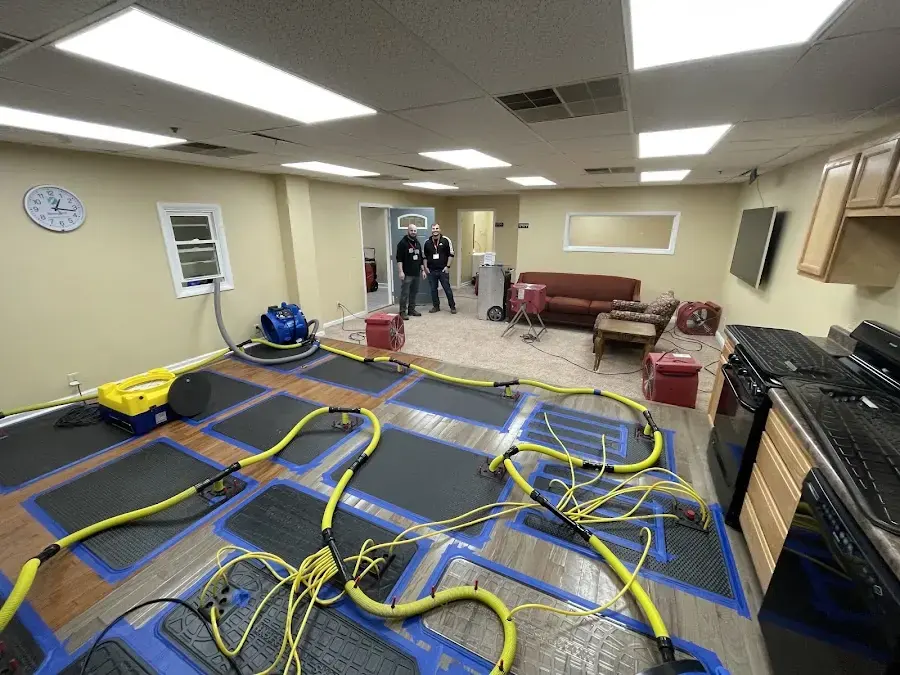
What to do first about structural drying and dehumidification in Arlington
- 1
Keep the building closed
Windows and doors stay shut so humid outdoor air does not undo the drying.
- 2
Leave the equipment alone
Moving or switching off units changes the airflow and the readings, so call before touching anything.
- 3
Keep the thermostat steady
A steady, moderate indoor temperature helps dehumidifiers pull moisture out faster.
- 4
Report a stopped unit
Tell the crew about tripped breakers or silent machines so a dead unit does not stall the job.
What does structural drying and dehumidification cost in Arlington, WA?
Drying one or two rooms generally runs $1,000 to $2,500. Several rooms or a crawl space bring it to $2,500 to $6,000, and hardwood, subfloor or Class 4 work runs $6,000 to $14,000.
Small job, one or two rooms
$1,000 to $2,500
- Air movers plus an LGR unit
- Meter checks each day
- Typically three to five days
Wider job or crawl space
$2,500 to $6,000
- Units set by room class
- Crawl space included
- Psychrometric log kept
Hardwood, subfloor or Class 4
$6,000 to $14,000
- Desiccant units on site
- Mats and cavity systems
- Extended run time
These are typical ranges, never a quote. The water category, the wet square footage, the material class and how soon drying began move the total most. The water damage cost calculator narrows it for your own loss.
How the structural drying and dehumidification job runs in Arlington
The walkthrough tech takes moisture readings before a single air mover goes down, so the plan follows what is actually wet. The drying team leaves the equipment running until the meters, not the look of the room, say the job is dry.
- 1
Chart the wet areas
A meter pass and an infrared scan mark each wet surface, and dry readings elsewhere set the target.
- 2
Stage the equipment
Fans and dehumidifiers are staged by room class and volume with the building closed.
- 3
Check on every visit
Each visit adds readings, and units move or multiply as numbers shift.
- 4
Stop at the goal
Equipment leaves only when materials reach target, and the final log goes to the owner.
Three tools, three jobs
- Fans keep air sweeping across floors and walls so surface water evaporates
- Dehumidifiers condense that vapor and carry it out of the building as liquid
- Mats, heat and cavity ports reach water locked inside hardwood and wall bays
- A sealed building stops damp outdoor air from undoing the work
How many units run, and where they sit, depends on the wet class and the room volume rather than a fixed formula.
What the numbers decide
A moisture meter reads wood and drywall, an infrared camera shows cold, wet patches, and a hygrometer tracks humidity in the air. Those readings are measured against dry material from an unaffected part of the same house.
Units get moved as the numbers change, leaving areas that have finished and concentrating on the ones that lag, and the job closes only when every material is at or near its dry goal.
Why some jobs run longer
- Hardwood and thick subfloors give up water slowly
- Wall cavities and crawl spaces with poor airflow
- Class 4 losses in dense materials, which may need desiccant units
One or two rooms of clean water commonly dry in three to five days, and anything longer comes with readings that explain why.
Structural drying and dehumidification in Arlington and the towns next to it
Drying work covers ZIP 98223, including Old Town, Hilltop, High Clover Park, Crown Ridge, Kent Prairie and Smokey Point, in houses, apartments, offices, shops and light industrial buildings.
The same service nearby: structural drying and dehumidification in Lake Stevens, Marysville, Everett.
Related water damage services in Arlington
Structural Drying and Dehumidification questions in Arlington, WA
Wet structure needs drying?
Any leak still running in Arlington is handled as urgent, day or night.
(888) 509-1696Drying help for Arlington buildingsDoes opening windows speed up drying?
Not in a mild, rainy Arlington winter, when the air outside is about as damp as the air inside. A closed building with dehumidifiers dries faster and more predictably.
How is dryness confirmed?
Each material is read with a meter and held against a dry sample from the same building, and the equipment stays until the numbers match and stop falling.
What does LGR stand for?
Low-grain refrigerant. These dehumidifiers keep extracting water from air that is already fairly dry, which suits drying a structure during cool weather.
When are desiccant dehumidifiers used?
Desiccant units handle very dry targets or cold spaces where refrigerant units struggle, such as hardwood, dense subfloors and Class 4 losses.
Why does the equipment run for days?
Moisture inside wood and framing moves out slowly. Pulling it too fast cracks flooring, and pulling it too slowly leaves damp spots, so the readings set the pace.
Does drying equipment raise the power bill?
Yes, somewhat, because units run around the clock for several days. The equipment log shows what ran and for how long, which supports claims for the cost.
Moisture in framing keeps doing damage after the water is gone
Equipment is chosen from the first readings, run with the space closed and logged each visit until every material is dry.
(888) 509-1696Drying dispatch across Arlington- Moving water handled as urgent, nights included
- Drying held to IICRC S500
- Moisture logs kept for your insurer