Structural Drying and Dehumidification in Monroe, WA
Once the standing water is gone, the structure still holds moisture. Crews set air movers and dehumidifiers by room, take readings every day and keep the equipment running until floors, walls and framing meet the dry target.
(888) 509-1696Monroe drying help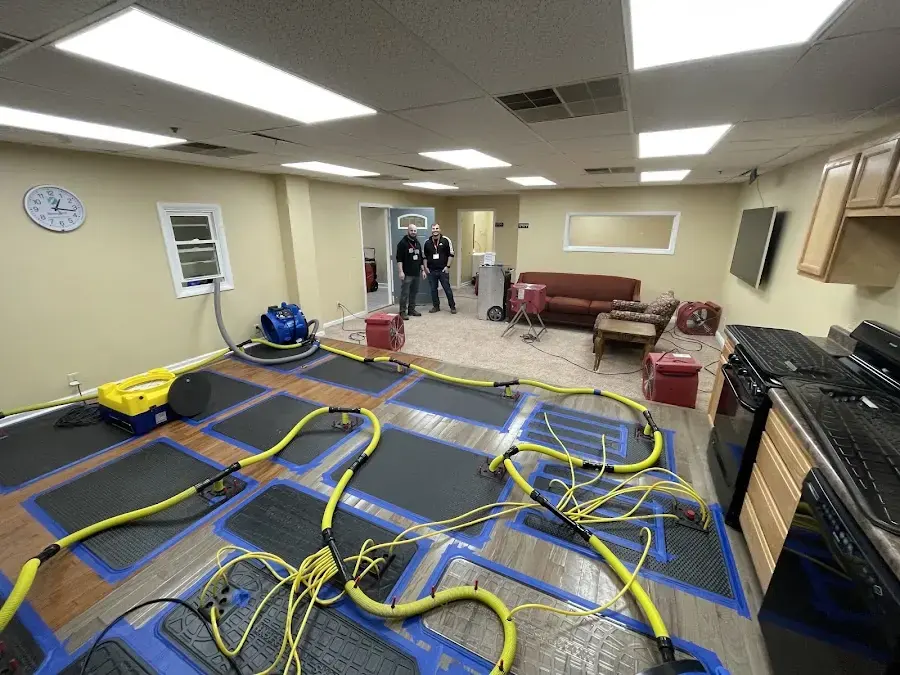
What to do first about structural drying and dehumidification in Monroe
- 1
Keep the heat steady
Hold the room at a normal indoor temperature so warm air can carry moisture out.
- 2
Leave wet materials in place
Pulling baseboards or flooring without a plan can ruin pieces that would have dried.
- 3
Skip box fans and heaters
Household fans and heaters move air without removing moisture.
- 4
Keep doors and windows closed
Closed rooms let dehumidifiers work, while damp wet-season air adds moisture back.
What does structural drying and dehumidification cost in Monroe, WA?
Structural drying in Monroe usually costs $1,000 to $2,500 for one or two rooms, $2,500 to $6,000 for several rooms or a crawl space, and up to $14,000 for hardwood, subfloor or Class 4 materials.
Small area drying
$1,000 to $2,500
- Air movers and one LGR
- Readings every visit
- Usually three to five days
Several rooms or crawl space
$2,500 to $6,000
- Equipment sized per room
- Under-floor drying setup
- Psychrometric logs kept
Hardwood, subfloor or Class 4
$6,000 to $14,000
- Desiccant dehumidifiers
- Drying mats on the floor
- Cavity drying and longer runs
These are typical ranges, never a quote. The water category, the wet square footage, the material class and how soon drying began move the total most. The water damage cost calculator narrows it for your own loss.
How the structural drying and dehumidification job runs in Monroe
The walkthrough tech takes moisture readings before a single air mover goes down, so the plan follows what is actually wet. The drying team leaves the equipment running until the meters, not the look of the room, say the job is dry.
- 1
Map the moisture
Meters and a thermal camera mark every wet surface and set the dry reference.
- 2
Place the equipment
Air movers and dehumidifiers go in by room and material, with cavities handled separately.
- 3
Read and adjust
Daily readings show progress, and equipment is moved, added or removed as numbers change.
- 4
Release and record
Equipment comes out only when every material meets the target, and the log is saved.
How the equipment is chosen
- Air movers push dry air across wet surfaces so moisture can leave them.
- LGR dehumidifiers pull water vapor out of the air and keep the humidity in the room falling.
- Desiccant units and drying mats handle hardwood, dense framing and cold or humid spaces where standard units struggle.
Equipment goes in after water extraction, because drying cannot keep up with standing water.
What daily readings prove
Each visit logs temperature, humidity and moisture in the materials. When the numbers stop falling, the crew changes airflow or adds equipment, and when every surface matches the dry reference, the equipment comes out. Readings also guard against surprises, because a wall that feels dry to the touch can still hold moisture inside, and only the meter shows it.
Under-floor spaces take longer
Crawl spaces and subfloors dry slowly because air barely moves under a house, so crawl space water removal plans extra airflow and ducting there.
Structural drying and dehumidification in Monroe and the towns next to it
Drying jobs in 98272 span Downtown Monroe, Fryelands, Lake Tye, North Kelsey, Park Place, Chain Lake and Chain Lake Estates, plus properties near Woods Creek and the U.S. Route 2 corridor.
The same service nearby: structural drying and dehumidification in Lake Stevens, Snohomish, Everett.
Related water damage services in Monroe
Structural Drying and Dehumidification questions in Monroe, WA
Drying questions in Monroe?
Any leak still running in Monroe is handled as urgent, day or night.
(888) 509-1696Drying crews for Monroe homesHow long does structural drying take?
Small jobs often run three to five days, while hardwood, subfloors and crawl spaces take longer. Daily readings, not a calendar, decide when the equipment comes out.
Why does Monroe's climate matter for drying?
Monroe averages 48 inches of precipitation a year on about 177 days, so outdoor air is often damp and gives little help. Dehumidifiers in a closed room do the real work.
What is an LGR dehumidifier?
A low grain refrigerant unit pulls moisture from the air at lower humidity levels than a standard unit, which makes it the workhorse for wood and drywall.
Can hardwood floors be saved?
Often, when drying mats start early. Mats pull water up through the boards, and readings track the moisture until it reaches the reference. Cupped or contaminated boards may still be replaced.
Does the equipment run all day?
It runs continuously, because stopping lets humidity climb again. The hum is steady, and the crew checks it each day and adjusts placement as readings fall.
How do readings prove the job is done?
Moisture in wood, drywall and concrete is compared with a dry reference from an unaffected part of the home, and equipment leaves when each material matches.
Damp Monroe air does not dry a soaked structure
Equipment is placed by room, read every day and removed only when floors, walls and framing meet the dry target.
(888) 509-1696Structural drying in Monroe, 98272- Moving water handled as urgent, nights included
- Drying held to IICRC S500
- Moisture logs kept for your insurer