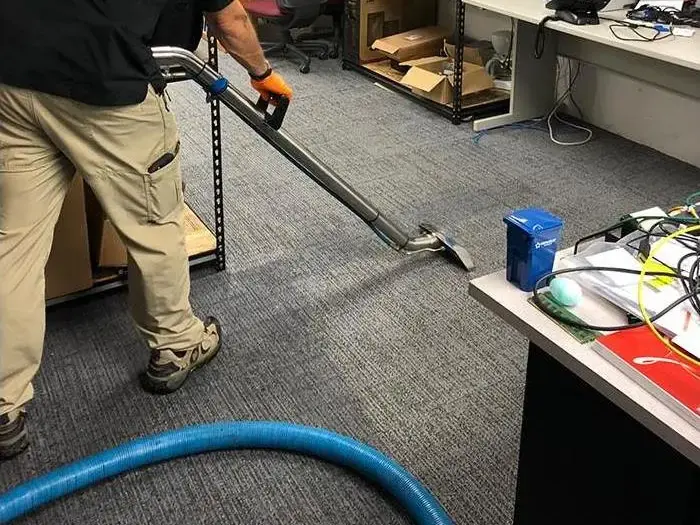
Smokey Point is where Interstate 5 meets State Route 531, a stretch of strip malls, government offices and distribution buildings that both Marysville and Arlington describe as commercial growth areas. A burst pipe or a roof leak in a building like that rarely stays in one suite. Owners and managers need a plan that dries the water and keeps the doors open.
Key takeaways
- Smokey Point has a retail corridor along State Route 531 with strip malls, a bus station and government offices.
- In strip malls, walls and roofs are shared, so water from one suite can reach its neighbors.
- Distribution and light industrial buildings need a plan that protects stock, floors and equipment.
- Phased drying lets part of a building stay open while the wet area is isolated and dried.
- Dated photos, a moisture map, daily logs and an inventory of damaged stock are what a building's insurer and landlord ask for.
Water damage in the Smokey Point commercial area
Retail and strip malls
Smokey Point is a major commercial and residential area at the junction of Interstate 5 and State Route 531, and Island Crossing is a cluster of retail stores at Interstate 5 and State Route 530.
Smokey Point has a retail corridor along State Route 531 with strip malls, a bus station and government offices. Marysville describes many of its commercial facilities as built for people arriving by car, along the Interstate 5 corridor and in the Smokey Point area.
For a shop in one of those buildings, Marysville commercial water damage and Arlington commercial water damage services start with the same question: how far has the water gone?
Along Interstate 5
Interstate 5 has four Marysville interchanges: 4th Street downtown, 88th Street NE, 116th Street NE and 172nd Street NE near Smokey Point. Commercial and industrial growth has followed that corridor.
Water losses in those buildings are as varied as the businesses: a restroom supply pipe in a shop, a roof leak over a warehouse bay, a sprinkler pipe in a stockroom.
Distribution and light industry
In Arlington, Washington, the Cascade Industrial Center, designated by the Puget Sound Regional Council in 2019, includes distribution centers and light industry near Smokey Point.
Marysville also has light industrial and manufacturing businesses in its northern and southern parts.
How water spreads through a commercial building
A supply pipe that splits above a ceiling can drop water into a shop, a stockroom and the suite next door before anyone notices.
Strip malls share walls, roofs and often ceiling spaces, so a leak in one suite can reach its neighbors. In a distribution building, water spreads across a large floor and wicks into pallets and cartons.
Water also follows the path of least resistance. It runs along beams, down wall cavities and under floor coverings, so the wet area is usually larger than the visible puddle.
Common sources of commercial water losses include these.
- A split supply pipe or failed fitting above a ceiling
- A roof leak after months of steady rain
- A water heater or restroom fixture in a back room
- A sewage backup from a floor drain
First steps for an owner or manager
Speed matters, but so does order. These steps limit the damage and protect the record, and most of them can be done before anyone with equipment arrives.
- Shut off the water at the building's main valve, or at the suite's valve if the building has one.
- Cut power to the wet area from a dry spot, and keep customers and staff out.
- Move stock, files and electronics off the floor and away from the leak.
- Photograph the damage and take video before anything is moved.
- Check neighboring suites for drips, stains and a damp smell.
- Tell the landlord, the property manager and the neighboring suites.
- Start a written log of actions and who was told.
Phased drying that keeps a business open
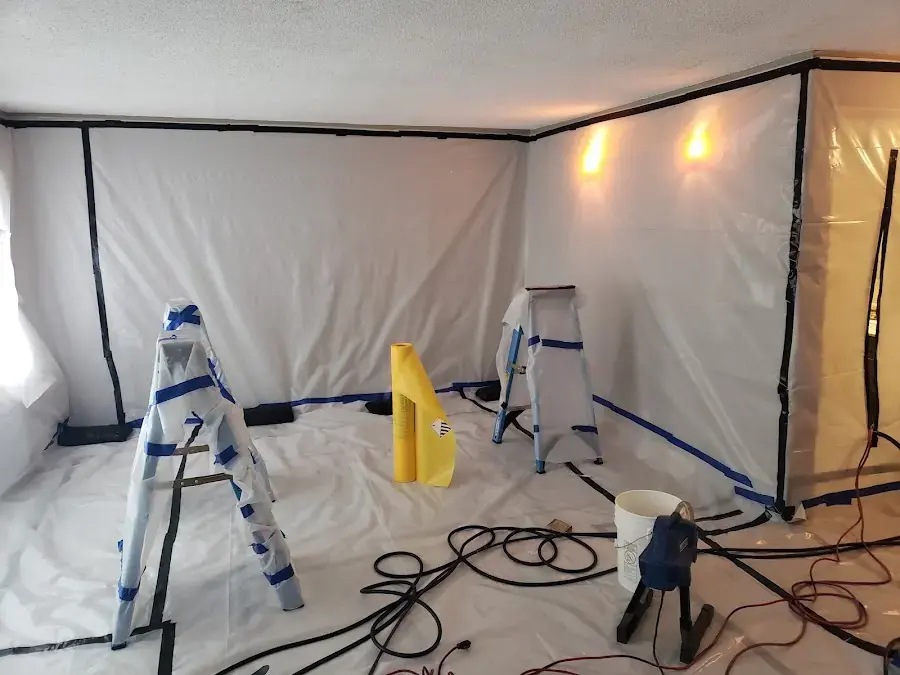
A commercial dry-out is planned around the business. The crew isolates the wet area with plastic containment so the rest of the space stays usable, and commercial water damage restoration follows the same IICRC S500 standard as a home.
The walkthrough and the moisture map decide the phases, so the plan is set by where the water went and not by a fixed schedule.
How the phases run
- Phase one: extract standing water and remove soaked ceiling tiles, carpet tiles or drywall.
- Phase two: set air movers and dehumidifiers in the wet area and log readings daily.
- Phase three: confirm dry readings, take down containment and hand the space back for repair.
Working around opening hours
Noisy work can be scheduled for hours when the building is closed, and equipment is placed to keep entrances, aisles and fire exits clear. Dehumidifiers and air movers are loud, and hoses and cords cross walkways, so taped routes and signs keep customers and staff safe.
Warehouses and distribution buildings
Large buildings change the plan. A wide floor lets water spread thin, so extraction covers a bigger area and moisture mapping matters even more.
A distribution building's drying plan often runs in zones, so stock in unaffected bays keeps moving while the wet bay is dried. These points shape the plan.
- Racking and pallets: stock is lifted off wet floors first.
- Concrete floors: dried with dehumidifiers and air movers, and often slower to reach readings than wood.
- Cartons and packaging: cardboard soaks up water and usually cannot be dried.
- Dock doors and aisles: kept clear so work can continue.
Records for the building's insurer and landlord
A commercial claim often has more than one reader: the owner's insurer, the tenant's insurer and the landlord. A clear file serves all of them.
For a Smokey Point building, Marysville water damage restoration and Arlington water damage restoration both start with the same documents.
- A moisture map of each wet wall, floor and ceiling, drawn before equipment is set
- Dated photos and video of the damage and the stock affected
- Daily drying logs until the goal is met
- An inventory of damaged stock, fixtures and equipment
- Lease and policy details for the affected suite
- A list of who was told, and when
Questions
Can a business stay open during a water damage dry-out?
Often part of it can. The crew contains the wet area and dries it in phases, so the rest of the space stays usable. How much stays open depends on where the water is, how far it spread and what the work needs.
What if a leak starts in the suite next door?
Tell the landlord or property manager, document the damage in your own suite and ask for the cause to be recorded. Responsibility depends on the lease and the cause, so the insurers and the landlord decide it.
How is drying proven in a commercial building?
Daily moisture readings are compared with a dry reference, and the equipment stays until the materials match it. The readings go into the file the insurer and landlord read.
What if sewage backs up through a floor drain?
Sewage is Category 3 water. The area is closed off, porous materials come out and surfaces are cleaned and treated before drying.
Do warehouses need a different plan than shops?
Yes. Large floors, racking and stock change how water spreads and where equipment goes, so the plan starts with a walkthrough and a moisture map.
Who should be told first when a pipe breaks in a strip mall?
The landlord or property manager and the neighboring suites, once the water is shut off. A written log of who was told and when helps later.