Commercial Water Damage in Monroe, WA
A leak in a store, office, warehouse or school stops more than a floor. Crews extract the water, dry the building in phases and document the loss so the business can keep working where it can.
(888) 509-1696Call about a Monroe commercial loss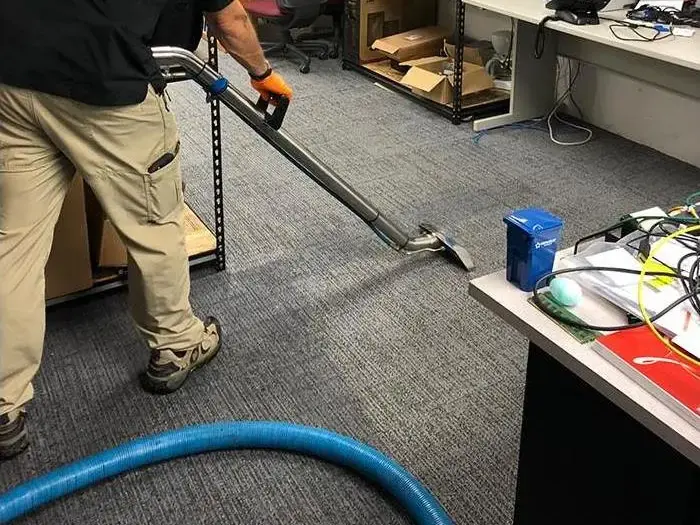
What to do first about commercial water damage in Monroe
- 1
Make the space safe
Stop the water, shut off power to wet areas and keep people out of slippery zones.
- 2
Protect stock and records
Move stock, files and electronics off the floor or into dry rooms.
- 3
Photograph for the claim
Photograph each wet area and damaged item, and note when the water was found.
- 4
Alert the manager and call
Tell the landlord or property manager, then call for extraction so phased drying can start.
What does commercial water damage cost in Monroe, WA?
Commercial water damage in Monroe usually costs $3,500 to $9,000 for a single suite or storefront, and $9,000 to $25,000 for several suites or floors. Category 3 or large losses range from $25,000 to $75,000.
One suite or storefront
$3,500 to $9,000
- Extraction and spot drying
- Wet carpet tiles lifted
- Readings every visit
Several suites or floors
$9,000 to $25,000
- Containment between tenants
- Ceiling tiles and drywall out
- Phased drying schedule
Category 3 or large loss
$25,000 to $75,000
- Sewage or flood protocol
- Large equipment sets
- Long drying with full records
These are typical ranges, never a quote. The water category, the wet square footage, the material class and how soon drying began move the total most. The water damage cost calculator narrows it for your own loss.
How the commercial water damage job runs in Monroe
The walkthrough tech takes moisture readings before a single air mover goes down, so the plan follows what is actually wet. The drying team leaves the equipment running until the meters, not the look of the room, say the job is dry.
- 1
Scope and secure
The crew walks the space with the manager, marks wet areas and sets containment and phasing.
- 2
Extract and remove
Extractors clear floors, and wet ceiling tiles, carpet tiles and drywall come out section by section.
- 3
Dry in phases
Equipment is set by area so some spaces can reopen while others dry.
- 4
Document and release
Logs, photos and a final scope go to the owner, tenant and adjuster as each area passes.
Building types and what they need
- Retail strips and big-box stores, where carpet tiles, ceiling tiles and stock all take water.
- Industrial buildings in the Fryelands industrial park, where slabs are large and equipment sets cover wide floors.
- EvergreenHealth Monroe Medical Center and school buildings, where clean air and separation from occupied rooms come first.
- Event venues such as the Evergreen State Fairgrounds, where large spaces call for larger equipment sets.
Each setting gets its own plan, because a hospital hallway and a warehouse slab have almost nothing in common.
Keeping the business open
Containment between tenants keeps wet and dry spaces separated, and drying is phased so one suite can reopen while another is still being worked. Extraction and tear-out happen first, then structural drying equipment goes where it will do the most good.
Documentation for claims and landlords
Commercial adjusters expect itemized scopes, so every wet room, ceiling tile and carpet tile is logged with photos and readings, and the drying log shows when each space reached its target.
Commercial water damage in Monroe and the towns next to it
Commercial calls in 98272 cover Downtown Monroe, Fryelands, North Kelsey, Lake Tye and Park Place, including retail strips and big-box stores along U.S. Route 2 and the Fryelands industrial park.
The same service nearby: commercial water damage in Lake Stevens, Snohomish, Everett.
Related water damage services in Monroe
Commercial Water Damage questions in Monroe, WA
Commercial water loss in Monroe?
Any leak still running in Monroe is handled as urgent, day or night.
(888) 509-1696Commercial crews for Monroe businessesCan a business stay open during water damage cleanup?
Often partly. Containment separates wet areas, and drying is phased so unaffected suites or aisles keep operating while the affected space is worked.
What makes a commercial loss harder than a home loss?
Size and downtime. Larger floor areas, shared walls between tenants and the need to reopen quickly mean more planning, more containment and more documentation than a house needs.
Who pays when the water came from another tenant?
That depends on the lease and the policies involved, so photos, readings and logs for each space matter. The drying log shows exactly what was wet and when it dried.
How are ceiling tiles and carpet tiles handled?
Wet ceiling tiles are usually discarded, because they sag and stain, while carpet tiles over clean water can sometimes be lifted, dried and reset. Contaminated water means both come out.
Does sewage or flood water change the plan?
Yes. Category 3 water needs protective gear, containment and sanitizing, and the area is closed off until it passes. Sewage backup cleanup covers that process.
Do medical or school buildings need extra care?
They do. Clean air, infection control and separation from occupied rooms come first, so containment, air scrubbers and tighter schedules are planned with the facility staff.
Downtime costs more each day water stays in a building
Containment, phased drying and written logs keep the business running and the claim documented.
(888) 509-1696Commercial loss help in 98272- Moving water handled as urgent, nights included
- Drying held to IICRC S500
- Moisture logs kept for your insurer