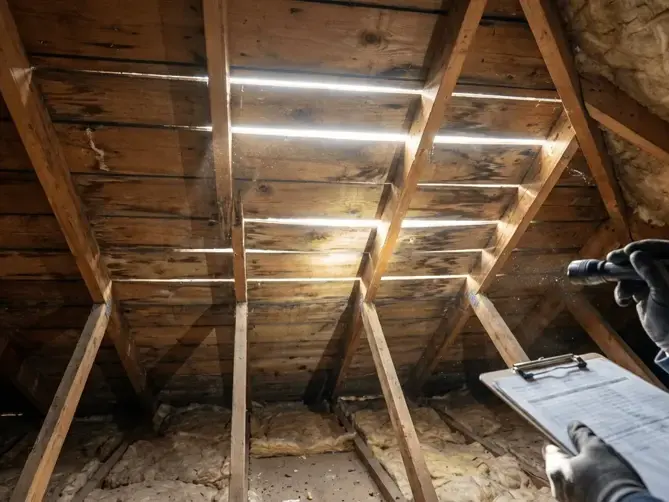
Snohomish's Historic District is the historic business and residential center of the city, and it is listed on the National Register of Historic Places. Its homes date from the 1860s to the present, with an emphasis on the years before 1920. A roof that old, with wide eaves and wood framing below, can let rain into places that are hard to see.
Key takeaways
- Historic District homes typically have steep roofs with substantial eaves and porches, and historic roofs were cedar shingle or composition.
- A ceiling stain often sits well away from the roof leak, because water runs along rafters and insulation before it shows.
- A sagging ceiling holds water, so keep people out from under it and catch drips in buckets.
- Wet insulation and joist bays are opened and dried, since material left wet for 24 to 48 hours can start to grow mold.
- About 52 percent of Snohomish homes were built before 1980, so many roofs and ceilings in town are old.
Snohomish's older homes and their roofs
What the Historic District looks like
The Snohomish Historic District is listed on the National Register of Historic Places. Its homes date from the 1860s to the present, with an emphasis on the years before 1920.
Wood is the predominant material, and brick, stone and stucco are also common.
Steep roofs, eaves and porches
Homes in the district typically have steep roofs with substantial eaves and porches. Historic roofs were cedar shingle or composition.
Each of those details is a place where water can get in: a worn shingle, a joint where a porch roof meets a wall, a valley where two slopes meet.
Wood framing holds water
With wood as the main material, rafters, sheathing and trim can soak up water and hold it long after the rain stops.
Wet wood swells, stains and softens, which is why a small leak found late can turn into a larger repair.
Where roof water travels before it shows
Water that gets past the roof covering rarely drops straight down. It runs along the sheathing and rafters, soaks the insulation and then appears as a stain somewhere else on the ceiling.
That is why the stain and the leak can be far apart, and why the attic or roof space is part of any inspection.
How a stain looks says a lot about where it came from.
- A brown ring that grows after each rain: points to a roof or flashing leak.
- A stain that appears on a dry day: points to a pipe or a bath above.
- Bubbling or peeling paint: shows that moisture is working through the surface.
- A bulge or sag: means the ceiling is holding water.
Common entry points
- Worn or lifted shingles
- Flashing around chimneys, vents and skylights
- Valleys where two roof slopes meet
- Joints where a porch roof meets a wall
- Eaves where water backs up behind a gutter
First steps with a leaking ceiling
Safety comes first, because wet ceilings can fail and wet light fixtures can carry power. A roof leak water damage loss often starts with a drip that looks small.
- Stay out from under a sagging or bulging ceiling.
- Set buckets under drips and move furniture and rugs aside.
- Switch off the circuit for any wet light fixture, from a dry spot.
- Photograph the stain and any drips, with the date showing.
- Ask a roofer for a temporary cover if rain is still coming in.
- Look into the attic from the hatch only, and do not step between the joists.
Who does what: the roofer and the drying crew
Two trades are involved, and the order matters. Drying a ceiling under an open roof just gets it wet again at the next rain.
- First, stop the water: a roofer covers or repairs the opening.
- Second, remove and dry: the restoration crew takes out wet material and dries the structure.
- Third, repair: new insulation, drywall and paint go in once readings are dry, so finishes never cover wet material.
Drying the ceiling, insulation and framing
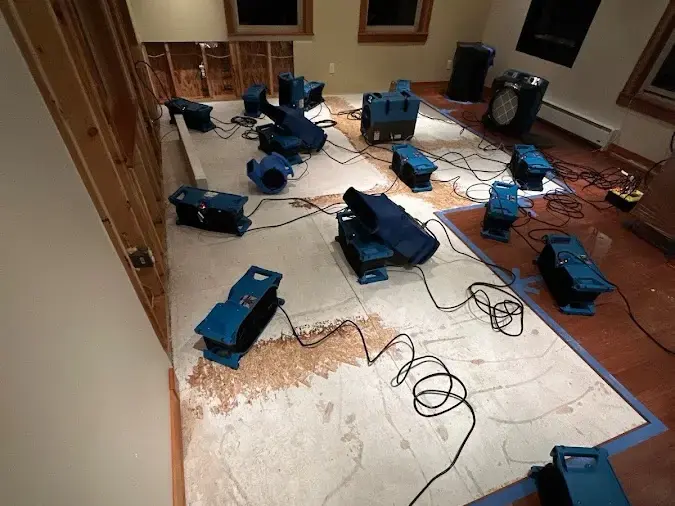
Once the roof is covered, the dry-out begins. A crew checks the ceiling, attic and walls with a moisture meter and a thermal camera to see how far the water went.
A thermal camera shows wet areas as color differences, and the moisture meter confirms them, so only the wet part of a ceiling is opened.
What comes out
- Wet insulation, which holds water and does not dry well in place
- Drywall that has swelled, sagged or crumbled
- Anything the meter shows is still wet after the first pass
What is dried in place
Framing, sheathing and sound ceiling material are dried with air movers and dehumidifiers. Structural drying continues until daily readings are close to a dry reference.
The same work is part of ceiling leak water damage repair, which opens only the wet cavities.
How old Snohomish homes compare citywide
Citywide, about 18 percent of Snohomish homes were built in 1939 or earlier, and about 29 percent were built before 1960. About 52 percent were built before 1980, and the median home dates from about 1978.
Those figures cover the whole city, not any one street or neighborhood, so each roof is checked on its own.
Porches add roof area and joints, and Historic District homes typically have them.
Western Washington winters are mild, wet and cloudy, so a worn roof gets tested for months.
Roof leaks and insurance
Policies often treat sudden storm damage differently from slow leaks caused by wear, so the cause matters. The insurer has the final word, so water damage restoration in Snohomish is documented with an adjuster in mind.
Dated photos, the roofer's notes and the drying team's readings give the insurer a record to read.
Past roof repairs and maintenance records can help show the condition of the roof before the loss.
- Photos of the stain, the attic and the roof, with dates
- The roofer's written cause of the leak
- Moisture readings from the first visit and every day after
- A list of removed materials
Questions
Why does a ceiling stain show up far from the leak?
Water runs along the sheathing, rafters and insulation before it drips through the ceiling. The stain marks where it finally came through, not where it got in.
Do old cedar shingle roofs always leak?
No. Age and wear raise the odds, but a roofer has to find the actual opening. Historic roofs in the district were cedar shingle or composition, and a roofer can tell which parts are worn.
What happens to wet attic insulation?
It is usually removed, because it holds water and dries slowly. Framing and sheathing are dried in place, and new insulation goes in once readings are dry.
Should a bulging ceiling be left alone?
A bulge holds water and can fail without warning. Keep people out from under it and ask a professional to release the water safely.
How fast does a wet ceiling need attention?
As quickly as possible. Wood and drywall that stay wet for 24 to 48 hours can start to grow mold, so drying should begin soon after the water stops.
Does homeowners insurance cover a roof leak?
It depends on the policy and the cause. Sudden storm damage and long-term wear can be treated differently, so check the wording or ask the insurer.