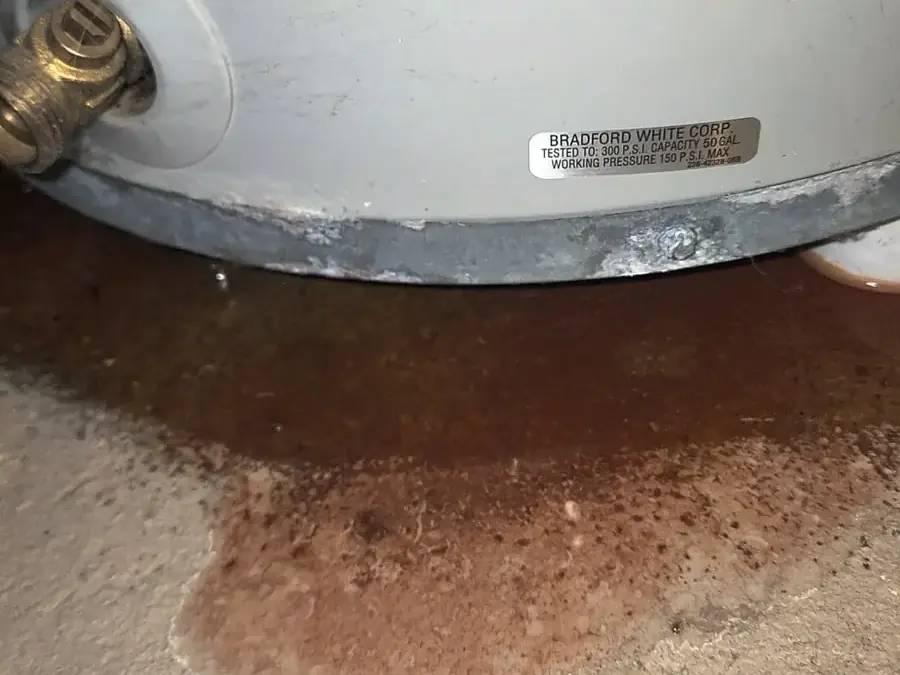
A tank water heater holds enough water to soak a garage floor or a utility closet when it fails. In Monroe, the leak is only half the job, because replacing the tank takes a plumbing permit. A new gas-heated installation also needs a mechanical permit.
Key takeaways
- In Monroe a plumbing permit is required to replace a water heater, and a new gas-heated installation also needs a mechanical permit.
- Closing the cold water valve on top of the tank stops new water from entering, but it does nothing about the water already on the floor.
- Where the tank sits changes the damage: a garage spreads water across the floor, while a closet sends it into walls and the floor below.
- Wet drywall at the base of the wall, soaked insulation and a wet subfloor are removed or dried, with moisture readings logged daily.
- Tank ages vary in Monroe, since about 69 percent of homes were built in 1990 or later and about 22 percent before 1980.
A leaking tank means replacement, and replacement means a permit
A tank that leaks from its body or a seam is replaced, not repaired. In Monroe that replacement is regulated, so the cleanup and the new tank have to be planned together.
The permit applies to the new tank. A crew can handle water heater leak cleanup while the replacement is arranged, extracting the water and drying the floor.
What Monroe requires for a water heater
The plumbing permit
In Monroe a plumbing permit is required to replace a water heater. The permit goes with the installation, so it is worth asking the installer who pulls it and when.
Keep a copy with the cleanup records, because an insurer may ask what was replaced and when.
These questions are worth settling with the installer before work starts.
- Who pulls the plumbing permit, and when?
- Is the new heater gas-heated, so that a mechanical permit is needed too?
- What paperwork stays with the homeowner afterward?
The mechanical permit for gas
A new gas-heated water heater installation also needs a mechanical permit. The rule names gas-heated installations, so the type of heater matters when the permit is requested.
The City of Monroe has the details, and the installer should confirm both permits before the new tank goes in.
Where the water goes, by tank location
Where the tank sits decides what gets wet and how far the water travels. These are the usual casualties.
- Drywall at the base of walls: wicks water upward.
- Insulation around the tank: soaks up water and holds it.
- Flooring and subfloor: wood, laminate and vinyl swell or lift.
- Boxes and stored items: absorb water from the floor.
Garage or utility room
Water spreads across the floor and runs toward walls, drains and stored items. Water extraction pulls the standing water, and the crew checks how far it wicked into the base of the walls.
Interior closet
A tank in a closet sends water into the wall framing and the floor under it. In a two-story house, a tank on an upper floor can send water into the ceiling of the room below.
First steps at the tank
Stopping the supply and the heat source comes first, because a live tank can keep feeding the leak. Water from a tank can be hot, so wear shoes with a good grip and keep bare skin out of the puddle.
- Close the cold water valve on the pipe at the top of the tank.
- For an electric heater, switch off its breaker, and for a gas heater turn the gas control to off, working only from dry footing.
- Photograph the tank, its label and the wet area.
- Move items off the floor and keep children and pets away.
- Leave the drain valve alone unless a plumber says otherwise, since the water inside can scald.
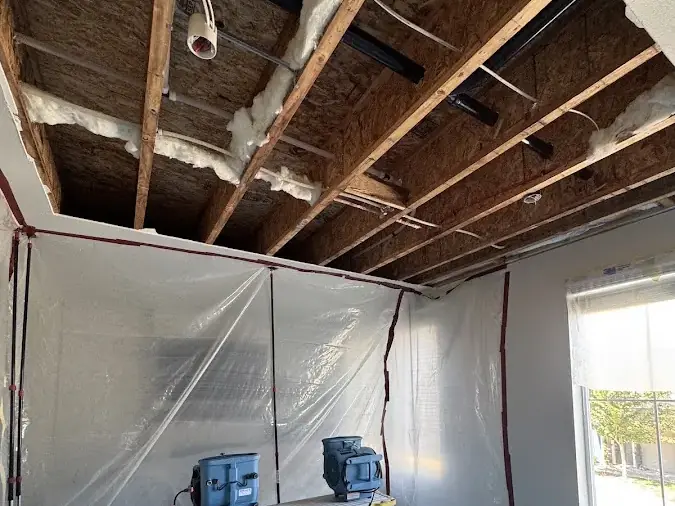
Cleanup and drying after a tank leak
Standing water comes out first, then moisture meters show how far the leak traveled. Many tank leaks are slow at first, and a damp spot that has grown for weeks can mean wet insulation and a soft subfloor behind the wall, so the check covers more than the visible puddle.
What gets removed
- Wet baseboard and the bottom of soaked drywall
- Insulation that absorbed water
- Flooring that has lifted or swelled
What gets dried
A thermal camera and a moisture meter show where water is hiding, and concrete is checked as well as wood, since a slab can hold moisture longer.
Framing, subfloor and concrete are dried with air movers and dehumidifiers. Structural drying follows daily readings until the materials match a dry reference.
Wood left wet for 24 to 48 hours can start to grow mold, so drying begins as soon as the water is out.
What Monroe's home ages say about tanks
The median Monroe home was built about 1997. About 69 percent of homes were built in 1990 or later, and about 22 percent were built before 1980.
That mix means tank ages range widely, so checking the date on the label is worth doing before a leak starts. About 71 percent of Monroe housing units are single family detached homes, and about 20 percent are in buildings with two or more units, where water from a tank can reach a neighbor.
These are signs that a tank may be failing.
- Rust or damp stains at the base of the tank
- A relief valve that drips
- A puddle or damp spot on the floor near the tank
- Rumbling or popping while the tank heats
If the tank is in an apartment or townhome
Tell the neighbor and the landlord at once, since water can travel through a shared floor or wall.
Insurance and records for a water heater leak
Coverage for a tank leak depends on the policy and the cause. The water damage and the tank itself can be treated differently, so the wording matters.
Report the loss promptly. Policies often set notice requirements, and early photos make the claim easier to document.
A short file helps either way, and Monroe water damage restoration records begin at the first visit.
- The permit and the installer's invoice
- Dated photos of the tank and the wet area
- The date on the tank label
- Daily moisture readings until the materials are dry
Questions
Does Monroe require a permit to replace a water heater?
Yes. A plumbing permit is required to replace a water heater in Monroe, and a new gas-heated installation also needs a mechanical permit.
Does a gas water heater need a different permit?
In Monroe, a new gas-heated water heater installation needs a mechanical permit on top of the plumbing permit. The City of Monroe can confirm what applies.
Can a leaking water heater be repaired?
A tank that leaks from the body or a seam is normally replaced. A drip at a fitting or a valve may be a smaller plumbing repair, and a plumber can tell which it is.
Is a water heater leak covered by homeowners insurance?
It depends on the policy and the cause. Coverage for the water damage and for the tank itself can be treated differently, so check the wording or ask the insurer.
What should be shut off first?
The cold water valve on the pipe at the top of the tank, then the power or the gas, working only from dry footing. Water from a tank can be hot, so keep skin out of it.
How long does drying take after a tank leak?
It depends on how far the water spread and what it soaked. The equipment stays until daily readings match a dry reference.