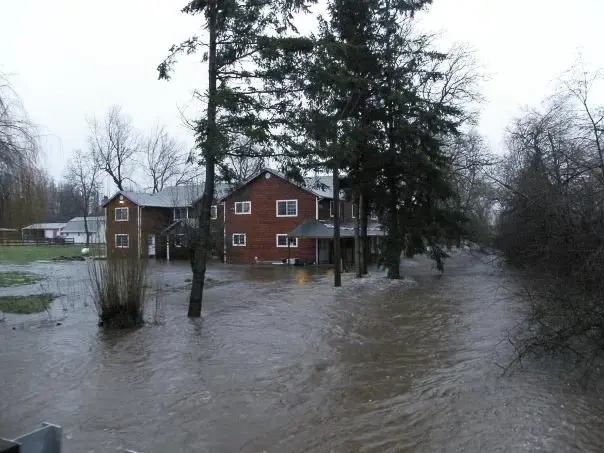
Marysville's low-lying downtown sits on the banks of Ebey Slough, a channel of the Snohomish River delta that runs along the city's southern edge. The city's hazard plan rates flooding as a high probability hazard and puts the greatest threat between November and February. Water that comes in from outside is handled differently from a plumbing leak, and the difference starts with what is in it.
Key takeaways
- Marysville's hazard plan puts the greatest flood threat between November and February.
- A proposed county ordinance, as of December 2023, said Marysville had seen minor overflow in significant King Tide cycles for the last decade, with the events appearing to grow in severity and duration.
- Slough, creek and tide water counts as Category 3 the moment it enters, so carpet, pad and wet drywall it touched come out.
- A county fact sheet says flood damage is not covered by most homeowners policies, so dated photos and daily drying logs matter.
- Stay out of flood water, and switch off power only from a dry spot.
Where Ebey Slough meets Marysville
The slough and the delta
The slough is a channel of the Snohomish River delta, and it marks the southern edge of Marysville. Downtown lies low, right on its banks.
The city names four watersheds: Quilceda Creek, Allen Creek, Sunnyside Creek and Ebey Slough.
Flood season, November to February
In the hazard plan, flooding carries a high probability rating, and the greatest threat falls between November and February.
The plan also lists a January 2020 severe storm with flooding among the city's federally declared weather events.
Winter rain adds to the risk. In the interior valleys of western Washington, measurable rain falls on about 150 days a year, and in December and January it is often recorded on 20 to 25 days or more each month.
King Tide overflow and the 2015 levee breach
A King Tide is one of the highest tides of the year. A proposed Snohomish County ordinance, as of December 2023, said the city had seen minor overflow in significant King Tide cycles for the last decade, and that the overflow appeared to be increasing in severity and duration.
The North Ebey Slough levee at Marysville was breached on August 28, 2015. Tidal water entered the Qwuloolt Estuary for the first time in more than a century.
According to a county fact sheet on the new flood maps, homes behind the non-accredited Ebey Slough levee keep their current flood hazard designation, and the area will be updated later.
None of this names a street or a house that floods. It explains why a Marysville homeowner treats outside water as a real possibility.
Why slough and flood water is Category 3
On its way into a house, outside water collects soil, runoff and sewage, which makes it contaminated before it ever touches the floor.
Restoration crews call it Category 3, and flood water cleanup follows a stricter plan than a clean water leak does. Porous materials that soaked it up are removed, not dried.
Hard materials such as tile, concrete and sealed wood can often be cleaned and kept. Soft, absorbent items are the ones that usually cannot.
- Carpet and pad: removed and discarded.
- Drywall and insulation: cut out where the water reached.
- Hard surfaces: cleaned, then treated with an EPA-registered antimicrobial.
- Framing and subfloor: cleaned and dried before anything is closed up.
First steps when outside water gets in
Safety comes first, because flood water can carry contamination and can reach outlets and cords.
- Stay out of the water, and keep children and pets out too.
- Turn off power only from a dry spot, and leave the panel alone if the floor around it is wet.
- Photograph the high-water mark on the walls and each wet room, with the date visible.
- Lift small furniture, papers and electronics above the water if that is safe.
- Skip the household vacuum and any fans until the crew has mapped what is wet.
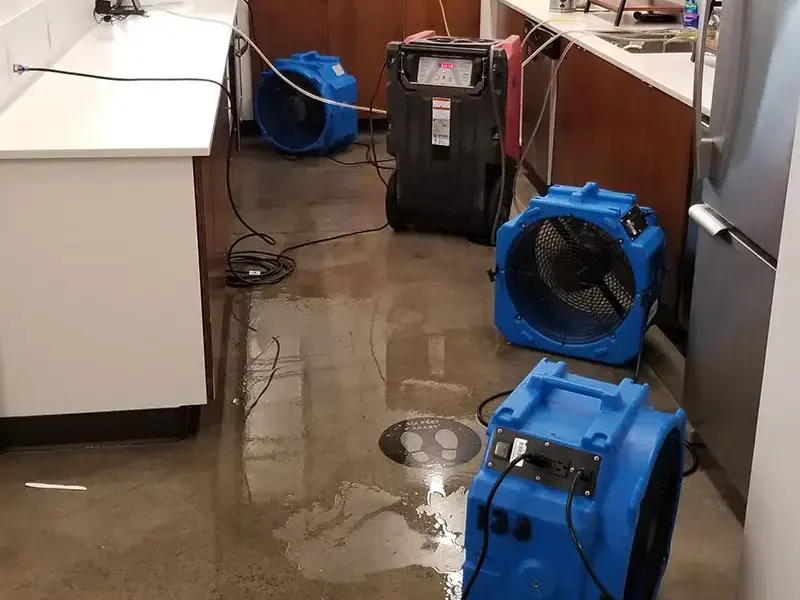
How the cleanup runs, from pumping to dry readings
The crew starts with water extraction, pumping out standing water so less has to be dried later.
Remove and clean
Wet carpet, pad and damaged drywall are bagged and removed. The surfaces left behind are cleaned and treated.
Meters and a thermal camera check the space under the floor and the cavities behind the walls, because outside water often travels farther than the stain on the surface shows.
Dry to the standard
Air movers and dehumidifiers go in once the water and the removable materials are out. Structural drying follows the IICRC S500 standard, with moisture readings logged every day.
The equipment stays until the framing and subfloor read within 2 to 4 points of a dry reference. Framing that stays damp for 24 to 48 hours risks mold, which is why the clock starts when the water stops.
Before flood season: a checklist for Marysville homes
Flood season peaks from November to February, so the weeks before it are the time to get ready. None of this stops a flood, but it makes the first day easier.
- Find the main water shutoff and the electrical panel, and make sure everyone in the house knows where they are.
- Move papers, electronics and keepsakes off the floor in ground-level rooms.
- Photograph each room and its contents now, so a claim has a starting point.
- Ask the insurer or agent whether a flood policy is in place, since a county fact sheet says flood damage is not covered by most homeowners policies.
- Keep a flashlight, rubber boots and gloves where they can be reached without entering a wet room.
Flood insurance and the paperwork
Marysville joined the National Flood Insurance Program in 1984, and its current effective flood map is dated June 19, 2020.
Rebuilding is a separate step. Marysville's municipal code requires floodplain permits for development in the floodplain, so the city is the place to ask what a repair needs.
What a policy pays depends on its wording and on where the water came from, so the insurer has the last word. For a Marysville loss, water damage restoration starts with the same records an adjuster reads.
- Photos or video of the water in each wet room, with dates
- An itemized list of what was removed
- The category of water and the class of loss, noted at the first visit
- Daily moisture readings until the drying goal is met
Questions
What is a King Tide, and does it flood Marysville homes?
A King Tide is one of the highest tides of the year. A proposed county ordinance said Marysville had seen minor overflow in those cycles for a decade, but it did not name a house or a street.
Is water from Ebey Slough clean or contaminated?
Contaminated. Water from outside collects soil, runoff and sewage on the way in, so crews classify it as Category 3 and remove the porous materials it reached.
Does homeowners insurance cover flood damage in Marysville?
A county fact sheet says flood damage is not covered by most homeowners policies. What a policy pays depends on its wording, so the insurer or agent has the final word.
When is flood season in Marysville?
The city's hazard plan puts the greatest flood threat between November and February.
Do flood-damaged carpet and drywall always have to go?
When the water came from outside, yes. Carpet, pad and wet drywall absorb contamination and cannot be made safe by drying, while hard surfaces are usually cleaned and kept.
How long does drying take after flood water?
It depends on how far the water spread and what it touched. The equipment stays until daily readings reach the dry goal, not for a fixed number of days.