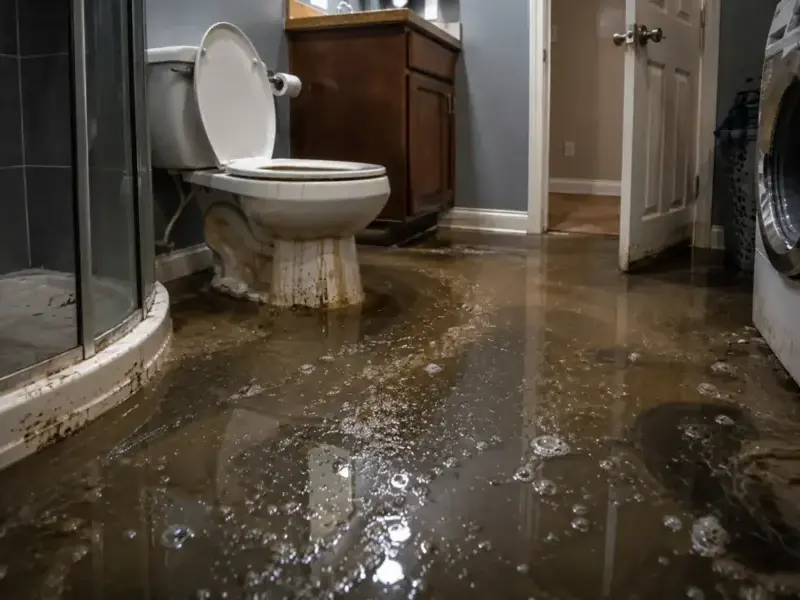
A sewage backup is one of the few water losses where the first question is whose pipe it is. In Everett, the city looks after sewer pipes in the public right of way, and private owners look after the side sewer outside it. Either way, the contaminated water inside the house needs the same careful cleanup.
Key takeaways
- Sewage that backs up into a home is Category 3 water the moment it happens, so keep people and pets out of the room.
- The City of Everett maintains sewer pipes in the public right of way, and under a city ordinance owners maintain the side sewer outside it.
- Everett's north end has a combined sewer and the south end a separated one, and which system serves an address is a question for the city.
- Carpet, pad, insulation and drywall that touched the water come out, and hard surfaces are cleaned and treated with an EPA-registered antimicrobial.
- Photos, a moisture map and a list of removed materials give an insurer what it needs, and sewer backup coverage depends on the policy.
Why sewage backup is Category 3 water
Water from a sewer pipe carries bacteria and waste, so it is contaminated from the start. Restoration crews class it as Category 3, and that class sets the plan for sewage backup cleanup.
Porous materials that soak it up cannot be made safe by drying. They are removed.
Even a small backup spreads, and these are the places it hides:
- Under flooring and carpet pad
- Inside drywall at the base of walls
- In cabinet kicks and under vanities
- In insulation beneath the floor
Signs it is the sewer and not a single clog
A clog in one fixture slows that fixture only. A blockage in the sewer pipe tends to show up in more than one place, as in these signs.
- Several drains slow down or gurgle at the same time.
- Water rises in the lowest tub, shower or floor drain when a toilet is flushed or the washer drains.
- A toilet bubbles when another fixture is used.
- A sewage smell rises from a floor drain.
Common causes
Grease, wipes, tree roots and a collapsed section are common causes of blockages in any sewer pipe.
What to do first
If sewage comes up through a floor drain or a tub, stop using water in the house and call a plumber for the pipe and a restoration crew for the cleanup.
Who maintains which pipe in Everett
The city's part
The City of Everett maintains the sewer pipes in the public right of way. The city runs its water, sewer, surface water and stormwater utilities through Public Works and Utility Services.
The owner's part
Under a city ordinance, private property owners are responsible for the integrity and maintenance of side sewers outside the right of way.
A side sewer carries a building's wastewater to the city main. One drain backing up usually points to the building's own pipe, while several drains backing up together can point to the pipe the building shares.
Ask the city which pipe is involved before assuming a repair belongs to the owner, since the boundary is the edge of the public right of way.
- A plumber: finds and clears the blockage in the owner's pipe.
- Everett Public Works: the city maintains sewer pipes in the public right of way, so that is the place to report a problem there.
- A restoration crew: removes the water and contaminated materials and dries the structure.
Combined and separated sewers in Everett
Everett's wastewater collection system has a north end combined sewer system and a south end separated sewer system. A combined sewer carries rainwater runoff and sewage in the same pipe.
In heavy rain or snowmelt, the flow in a combined system can exceed its capacity and overflow to the Snohomish River or Port Gardner Bay. The north end system was largely built between 1890 and 1963, and the city monitors 13 combined sewer overflow outfalls.
Everett's wastewater is treated at the Everett Water Pollution Control Facility on Smith Island.
Which system serves a particular address is a question for the city. A backup in one house is not proof of a problem with the system, since a blocked side sewer can cause the same symptoms.
First steps when sewage backs up
Contaminated water calls for caution. A crew that handles sewage backups works in protective gear with containment, and the steps below keep everyone safe until then.
- Keep everyone out of the room, including children and pets.
- Stop using sinks, tubs, toilets and the washer so no more water goes down the drain.
- Turn off power to the wet area only from a dry spot.
- Wear rubber boots and gloves if anything must be moved, and wash well afterward.
- Leave the household vacuum and the mop alone, since they spread sewage instead of removing it.
- Photograph the room before anything is touched.
What the cleanup involves
Removal and containment
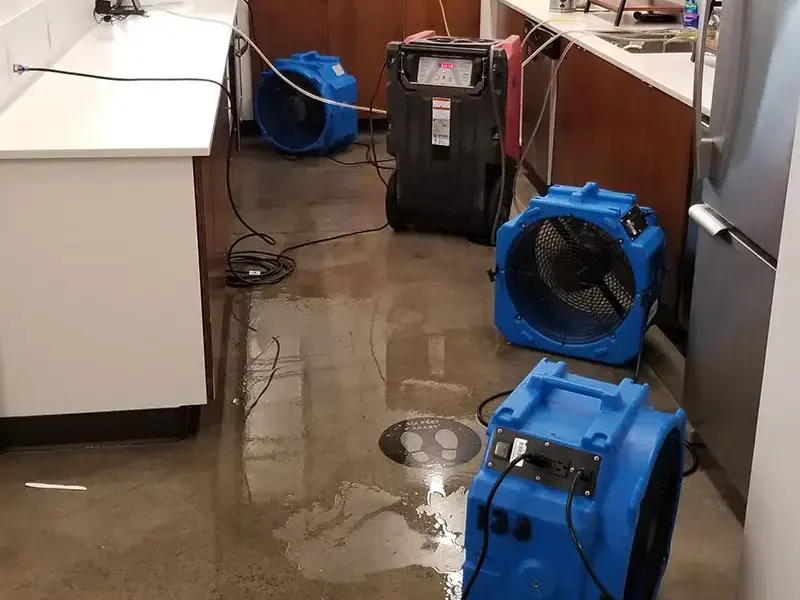
The crew may seal off the room with plastic and run HEPA air scrubbers so contamination does not drift into the rest of the house. Then water extraction pulls out the standing sewage.
Contents are sorted into what can be cleaned and what cannot, and anything thrown out is photographed first.
- Carpet and pad come out.
- Drywall and insulation are cut out where they soaked up water.
- Hard floors and cabinets are cleaned, then treated with an EPA-registered antimicrobial.
Drying and clearing
Once the contaminated material is gone, structural drying removes moisture from the framing and subfloor. Readings are logged daily until they match a dry reference.
Insurance and records after a backup
Some policies treat sewer backup as a separate coverage, so the wording matters. Ask the insurer early whether it applies and how to report the loss, because the insurer has the final word on what is paid.
A good file helps whatever the policy says, and Everett water damage restoration starts with the same records. Porous items that were thrown out should be listed and photographed first.
- Dated photos of the room before cleanup
- The category of water and the rooms affected
- A list of removed materials, with rough ages
- Daily drying logs until the goal is met
Questions
Is a sewage backup the city's problem or the homeowner's?
It depends on where the blockage is. The City of Everett maintains sewer pipes in the public right of way, and under a city ordinance owners maintain the side sewer outside it.
Why is sewage cleanup different from a clean water leak?
Sewage is Category 3 water. Porous materials it touches are removed instead of dried, and surfaces are cleaned and treated.
Does Everett have a combined sewer?
The north end has a combined sewer system and the south end a separated one. Which system serves a given address is a question for the city.
Can heavy rain make a combined sewer overflow?
The city says that in heavy rain or snowmelt the flow in a combined sewer can exceed capacity and overflow to the Snohomish River or Port Gardner Bay.
What gets thrown away after a sewage backup?
Porous items the water touched, such as carpet, pad, cardboard and upholstered furniture, are usually discarded. Hard items can be cleaned and treated.
Is sewer backup covered by insurance?
Some policies cover it separately and some do not. Check the policy wording or ask the insurer.