Basement Flooding Cleanup in Arlington, WA
Water in a below-grade room is heavy, slow to leave and hard on drywall, carpet and framing. Basement flooding cleanup in Arlington starts with pumping and extraction, then drying the slab and walls to a measured finish.
(888) 509-1696Flooded Arlington basement? Call now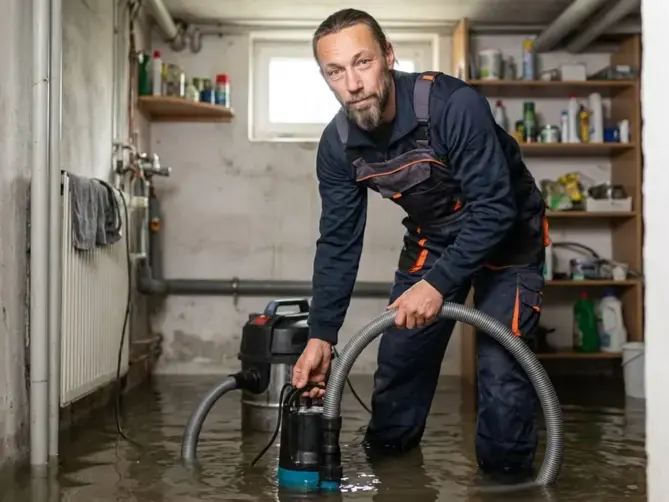
What to do first about basement flooding cleanup in Arlington
- 1
Stay out of deep water
Standing water over outlets or the furnace can be energized, so keep out until the power is confirmed off.
- 2
Cut power to the area
Turn breakers off only from a dry spot, and leave appliance and furnace shutoffs to the crew.
- 3
Move what can be moved
Carry boxes, electronics and furniture upstairs or onto blocks, and photograph the high-water mark first.
- 4
Let the crew set the pace
Pumping out too fast while the ground outside is saturated can stress basement walls, so the water is lowered in stages.
What does basement flooding cleanup cost in Arlington, WA?
A bare, unfinished basement runs $2,000 to $5,000. With finishes in play, clean water costs $5,000 to $10,000, and water from outside or a drain costs $10,000 to $25,000.
Bare basement
$2,000 to $5,000
- Pump-out, then wet vacuum
- Slab and wall dehumidifying
- Daily meter checks
Finished, clean water
$5,000 to $10,000
- Wet pad and insulation out
- Cuts made where walls soak
- Framing and slab dried
Finished, outside water
$10,000 to $25,000
- Category 3 removal
- Sealed work area
- Extended drying
These are typical ranges, never a quote. The water category, the wet square footage, the material class and how soon drying began move the total most. The water damage cost calculator narrows it for your own loss.
How the basement flooding cleanup job runs in Arlington
The walkthrough tech takes moisture readings before a single air mover goes down, so the plan follows what is actually wet. The drying team leaves the equipment running until the meters, not the look of the room, say the job is dry.
- 1
Pump and vacuum
Standing water is pumped down in stages, then the slab and low areas are wet vacuumed.
- 2
Strip what cannot dry
Soaked carpet, pad, insulation and lower drywall are removed, sorted by water category.
- 3
Dry the structure
Dehumidifiers and air movers run with the space closed until slab, framing and walls hit target.
- 4
Check and record
Final readings, photos and the equipment log are written up before any rebuilding.
Where basement water comes from
- Rain that seeps through the slab, wall joints or window wells
- A floor drain or sewer that backs up under heavy load
- A failed water heater, supply pipe or sump pump
- River or surface water that rises outside and finds a way in
The source matters because it sets the water category: seepage and supply leaks are usually clean or gray, while a drain backup or river water is Category 3.
Unfinished or finished, the plan changes
In an unfinished basement the slab and masonry walls dry quickly once the water is out, so the work is mostly pumping, vacuuming and dehumidifying.
A finished basement adds carpet, pad, drywall, insulation and trim. Wet pad and lower drywall come out, flood cuts go in at the height the readings support, and the framing is dried before anyone talks about rebuilding.
What the drying takes
- Dehumidifiers sized to the volume of the room
- Air movers aimed along walls and across the slab
- Daily readings on the slab, framing and remaining drywall
The basement stays closed while the equipment runs, because open doors and windows let humid outdoor air undo the drying.
Basement flooding cleanup in Arlington and the towns next to it
Basement flooding work covers ZIP 98223, including Hilltop, Kent Prairie, High Clover Park, Gleneagle, Crown Ridge, Old Town and West Arlington, wherever a below-grade room has taken on water.
The same service nearby: basement flooding cleanup in Lake Stevens, Marysville, Everett.
Related water damage services in Arlington
Basement Flooding Cleanup questions in Arlington, WA
Basement taking on water?
Any leak still running in Arlington is handled as urgent, day or night.
(888) 509-1696Pump-out help for an Arlington basementIs a wet basement always an emergency?
Standing water is, since drywall, carpet and framing keep absorbing it. A damp slab with no standing water is less urgent, but readings still show whether it needs drying before finishes are affected.
Can finished walls be saved after a basement flood?
Sometimes. Drywall that read dry above the wicking height stays, and wet lower sections are cut out. Insulation behind the cut is usually removed, and the cavity is dried before panels go back.
Does basement water count as flood damage for insurance?
It depends on the source. Seepage and a sudden pipe failure are treated differently from rising river or surface water, so the adjuster's wording on the cause matters, and photos taken early help.
Why does the crew keep the basement closed while drying?
Humid outdoor air carries moisture back in, and Arlington's wet season makes that worse. A closed space lets dehumidifiers pull water out of the air, slab and framing without competing with the weather.
What if the water came from the sewer drain?
Backflow through a floor drain is Category 3. Porous materials it touched are removed, surfaces are cleaned and treated, and containment keeps the rest of the house clear while the crew works.
How is a basement slab checked for dryness?
Meters read the surface and a probe reads deeper, and the numbers are compared with a dry area of the same slab. Equipment stays until the readings match and hold.
Water in a basement keeps soaking what it touches
Pump-out starts as soon as the space is safe, and the slab, framing and walls are dried to readings that are logged for the claim.
(888) 509-1696Basement flood dispatch in Arlington- Moving water handled as urgent, nights included
- Drying held to IICRC S500
- Moisture logs kept for your insurer