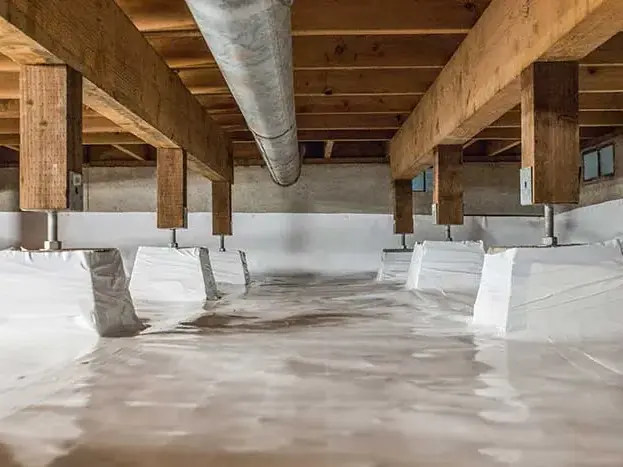
Lake Stevens gets about 39 inches of rain a year, with November and December the wettest months. In many parts of the city a shallow layer of soil sits on hardpan, so winter rain has little room to sink in and gathers near the surface. For a house on a raised floor, the low ground under the floor is where that water often ends up.
Key takeaways
- Hardpan under shallow soil limits how fast rain soaks in, so winter water tends to settle in low spots, including under raised floors.
- November and December are the wettest months, at about 5.9 inches each, so the first big storms of the season are the time to look.
- Standing water, sagging insulation and a musty smell in the rooms above mean the crawl space has taken on water, even when the floors look normal.
- Water that keeps appearing on a dry day points to a leaking pipe, and the main valve is the first thing to close.
- Pumping is only the first step. Soaked insulation and a torn vapor barrier come out, and the framing is dried until readings match dry wood.
Why winter rain collects under Lake Stevens homes
Hardpan and shallow soil
Many areas of Lake Stevens have shallow soil over hardpan, a dense layer that water struggles to pass through. Rain that cannot sink in spreads sideways just under the surface and settles wherever the ground is lowest.
A raised floor sits over exactly that kind of low ground, with a vented crawl space between the soil and the joists. Vents that let air move through can also let runoff in when the ground outside is saturated.
The wettest months
The city averages about 39 inches of rain a year. November and December are the wettest, at about 5.9 inches a month, and August is the driest.
By the time the heaviest storms arrive, the ground is already full, so each new inch of rain has to go somewhere. A low crawl space is a likely place, and crawl space water removal is the job that follows.
Signs of a wet crawl space
A little dampness on the soil after a long rain is common. Water that stands, insulation that sags or a smell that reaches the rooms is a different matter.
Any one of the signs below is a reason to look closer, even when the rooms above look normal.
- Standing water or a dark sheen on the soil or the plastic vapor barrier
- Insulation hanging down between the joists or sitting in water
- A vapor barrier that has lifted, floated or torn
- A musty smell near floor vents or in closets
- Floors that feel soft or bouncy, boards that cup, or doors that start to stick
Rain water or a leaking pipe?
Rain is only one source. Raised floors put the supply pipes in the crawl space too, so a pinhole leak or a loose fitting can add water on a dry day.
If water keeps appearing when the weather is dry, close the main valve and check again later. If the puddle stops growing, a pipe was feeding it, and a burst pipe loss needs a plumber for the repair and a drying crew for the damage.
Where the water sits, and when it shows up, usually separates the sources.
- After rain: water collects at the low edges of the space and along the foundation, and it returns on wet days.
- From a pipe: a steady drip or a wet patch under the kitchen, bath or laundry, even in dry weather.
- From the roof or gutters: water pooled under a downspout or along a single wall.
First steps before anyone goes under the house
Wiring, ductwork and pipes all run through a crawl space, so the first job is safety, not scooping.
- Stay out if the water is deep or touches wiring, and switch off power only from a dry panel.
- Photograph the water, the insulation and the barrier from the access door, with the date showing.
- Keep children and pets away from the access door and from any wet room.
- Write down the rain dates and what the weather did, since that record helps with a claim.
- Skip the household vacuum and any extension cord that crosses wet ground.
What kind of water is under the house
Crews sort water into three categories, and the category decides what can be dried and what has to come out.
- Category 1: water from a clean source such as a supply pipe.
- Category 2: water with significant contamination, such as washer or dishwasher discharge.
- Category 3: grossly contaminated water, such as sewage or flood water from outside.
Where crawl space water falls
Rain runoff that crosses a yard picks up soil and debris, so it is not treated as clean water. Because crawl space water has touched soil, soaked insulation and a torn barrier are removed instead of dried in place.
A burst supply pipe starts clean but can slip to a higher category if it sits.
How crawl space water removal and drying work
The work moves from the access door inward, and liquid water comes out first because pumps move it far faster than dehumidifiers can.
Pump out and remove
Water extraction starts with submersible pumps, then a wet vacuum takes the last film off the barrier and soil.
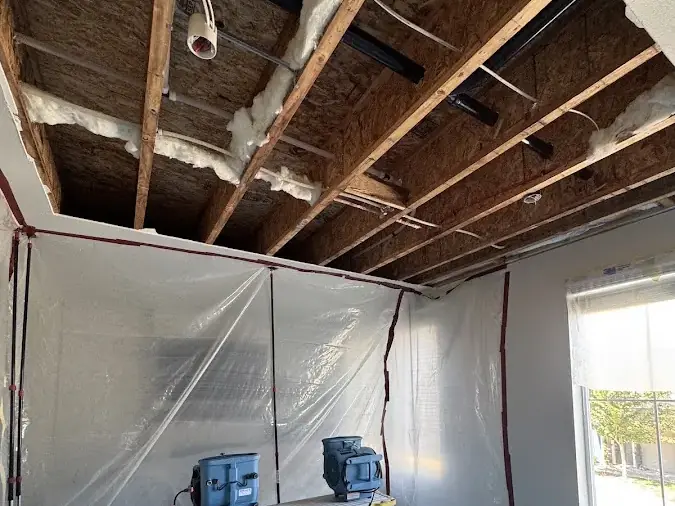
- Insulation: soaked or fallen batts between the joists come out.
- Vapor barrier: torn or flooded plastic is removed so the soil can dry.
- Debris: mud and leaves that washed in are cleaned out.
Dry the framing
A dehumidifier set in the space does most of the work, with air movers aimed at the wettest joists and subfloor.
Daily moisture readings show progress. Structural drying ends when the framing is within 2 to 4 points of a dry reference, not when the space merely looks dry.
Why drying is slow in damp weather
Lake Stevens has high relative humidity near the water, and in the wet months the outdoor air is already full of moisture. Open windows and box fans do little, so equipment does the drying.
Wood left wet for 24 to 48 hours can start to grow mold, so a slow start costs more than a fast one.
Keeping water out afterward
Once the framing is dry, a repeat problem is solved outside the house. Drainage and roofing contractors handle that work, not the drying crew.
- Grading: soil near the foundation should slope away from the house.
- Downspouts: extend them so roof water lands well away from the wall.
- Vents and access door: keep them in good repair so runoff does not pour in.
- Next storm: look under the house after the next heavy rain.
Questions
Is a damp crawl space after heavy rain normal?
A little moisture on the soil can show up after a long rain. Standing water, wet insulation, a floating vapor barrier or a musty smell in the rooms above means the space needs pumping and drying.
Can crawl space water damage the floors above?
Yes. Water under the house wets the joists and subfloor, which can cup hardwood, loosen tile and leave a damp smell in the rooms. Drying the framing protects the floors.
Does the vapor barrier need to be replaced?
A barrier that held standing water or tore during pumping is usually removed so the soil and framing can dry. A new one goes down once the readings are dry.
Why does water sit under Lake Stevens homes in winter?
Shallow soil over hardpan limits how fast rain soaks in, so winter rain collects near the surface and settles in low ground. Raised floors sit over that ground.
How long does a wet crawl space take to dry?
It depends on how much water reached the insulation, the joists and the subfloor. The equipment stays until daily readings match a dry reference, not for a set number of days.
Should a homeowner go under the house to look?
Only if the water is shallow, the power is off and the wiring is clear of it. A look from the access door with a flashlight and a camera is safer.